Netherlands and the ICJ case South Africa v Israel: Damage control masked as support for the Palestinian cause
By ELSC Crimes & Complicity Team.
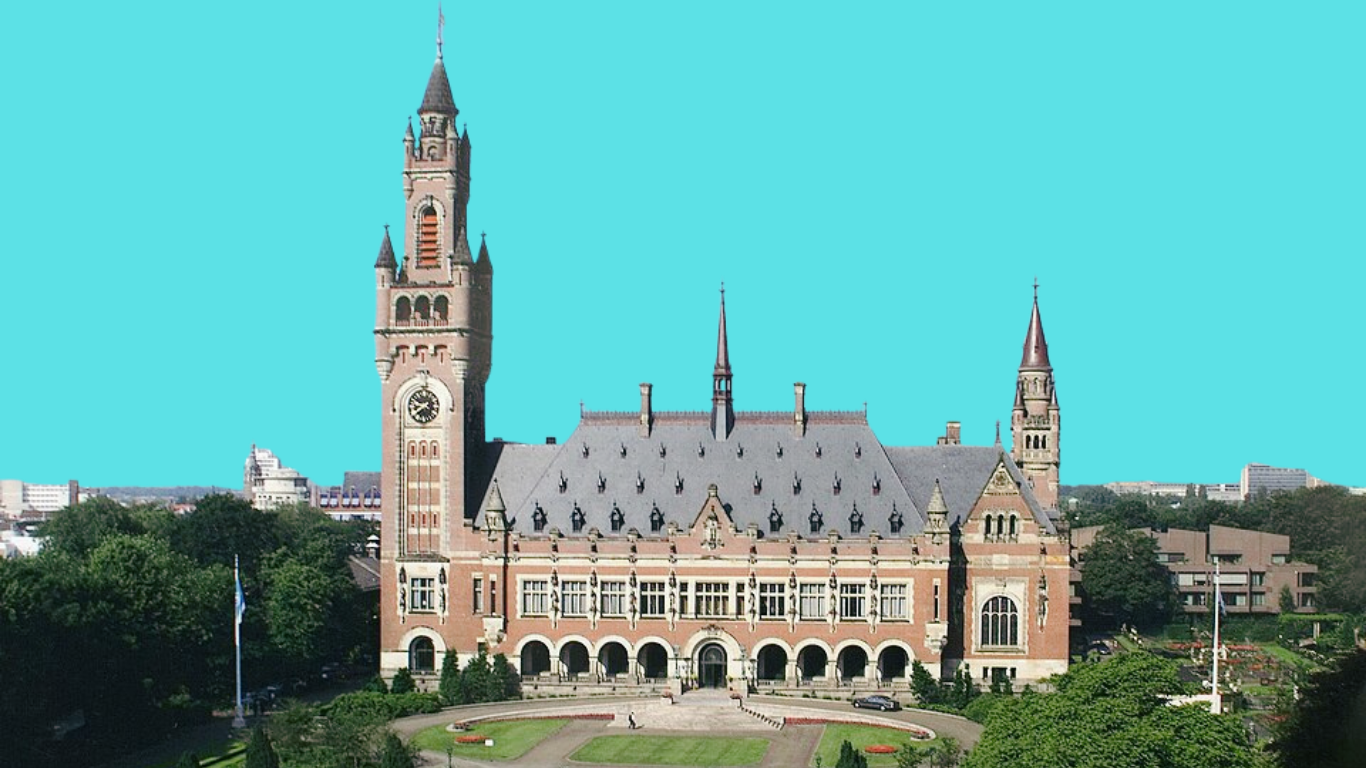
The intervention of the Netherlands in South Africa’s case against Israel at the World Court was hailed as a victory by many in the movement for the liberation of Palestine. However, a closer reading shows it was nothing more than an attempt by the Dutch government to muddy the waters around genocide prevention.
Dutch newspapers were filled with hopeful articles about the Netherlands’ alleged ‘joining’ of South Africa’s case against Israel at the International Court of Justice (ICJ), presenting it as a significant development in support of accountability for violations of international law in Gaza. While it is indeed interesting that the Netherlands has associated itself with a legal case against a genocide it has actively facilitated, its intervention should not be read as support for the claimants in this case. Rather, it should be exposed as a strategic attempt to regressively interpret key provisions of the Genocide Convention, including third-state obligations and standards of attribution under existing ICJ jurisprudence, with the aim of preventing any true accountability for states that aid Israel in committing its genocide against the Palestinian people.
Evading legal responsibility – The Netherlands and the Genocide Convention
Since there appears to be some confusion over the meaning of the Netherlands’ declaration and the contents of it, it is important to clarify a few key points:
Firstly, the declaration to intervene concerns an Article 63 intervention, which allows states to present their interpretation of treaty provisions at issue before the Court. This type of intervention does not amount to support of either party to the proceedings but is formally limited to a neutral offering of a state’s legal analysis.
Secondly, the Netherlands’ declaration is merely an announcement of intent to intervene. It sets out the general contents of its legal position, but it remains to be seen what the actual submission contains.
Thirdly, part of the intervention is framed as supporting a low threshold for genocidal intent, where acts such as displacement, starvation, denying access to medical aid, destroying essential infrastructure, etc., may all be relevant indicators. However, this is not a novel position in itself; similar interpretations have appeared in previous Dutch submissions and broadly reflect general opinio iuris and settled case law and do not actually progress the development of international law.
Fourthly, and most importantly, the central legal and political significance of the intervention lies in its treatment of the obligations of third states once a risk of genocide has been identified under Article I of the Genocide Convention. The Netherlands emphasises that these obligations are not precisely defined, depend heavily on context, and must be assessed on a case-by-case basis. This is a very clear case of the Netherlands trying to evade legal responsibility for not doing anything substantial to prevent the Gaza genocide, delivering arms to the genocidal regime, giving it political cover, and facilitating investments.
This framing is significant. It can be read as an attempt to limit or diffuse the clarity of the duty to prevent genocide as articulated in the ICJ’s jurisprudence, which requires states to take “whatever measures are reasonably available to them, in order to stop the genocide as far as possible”. In other words, the Netherland’s declaration provides a regressive interpretation of international law and an interference with the tangible and material consequences for third states facilitating genocide. By emphasising legal indeterminacy, it opens space for a narrower understanding of what is required of states that continue to maintain political, military, or economic relations with a state under such scrutiny. This move should be read as damage control, rather than a meaningful contribution to the legal discussion on this topic.
The appearance of alignment with international law
This is where the political stakes become clear. In the past two years, we have seen that international rulings and even national determinations of genocide likely being committed mean absolutely nothing in practice if third states do not take decisive action to prevent and punish it. The ICJ has already indicated, in its January 2024 provisional measures order, that there is a serious risk of genocide taking place in Gaza. The persistence of arms transfers, diplomatic support, and economic relations by allied states highlights the gap between legal obligations as articulated by the Court and their enforcement in practice. Israel was unwaveringly allowed by its allies to continue committing genocide, precisely because only states can enforce international law and they chose to do nothing.
While the Netherlands’ intervention is presented in neutral legal terms, it raises serious questions about whether it is in fact contributing to a narrowing of accountability rather than strengthening genocide prevention. The emphasis on flexibility and case-by-case assessments risks diluting the preventive obligations that arise once a serious risk of genocide has been identified. This should not be hailed as a victory, nor should it be seen as a ‘step in the right direction’. Rather, it should be understood as part of a broader pattern in which states that are structurally implicated in ongoing violations seek to manage legal exposure while maintaining the appearance of alignment with international law.
Ultimately, the Netherland’s intervention reflects a familiar dynamic: the attempt to frame inaction and complicity within the language of legal ambiguity. The Netherlands are effectively covering themselves for legal liability and future litigation, because they know exactly how indispensable their inaction is for Israel’s ability to keep committing genocide.
ELSC Crimes & Complicity Team
The Crimes & Complicity Team at ELSC is committed to ending impunity for state, corporate, and individual actors that facilitate Israel’s violations of Palestinian rights.
Contribute to the Blog
We encourage contributions that provide legal analysis, political reflection, strategic insights, movement experiences, interviews, and briefings relevant to Palestine solidarity and anti-Palestinian repression across Europe.